Expert interview: Why golf courses rely on modern facilities to deliver enjoyable guest experiences
Greenhills Country Club food and beverage professional, Matt MacFarlane, discusses how well-designed clubhouses and event spaces drive an increase in overall club revenue.
Running a food and beverage operation is particularly demanding, requiring a delicate balance of quality, efficiency and innovation to meet the high expectations of members and guests. By hosting exclusive events, golf and country clubs can make their members feel valued and appreciated. Holding events in welcoming and accommodating facilities are ideal as a draw for other amenities, new membership and additional revenue.
Food and beverage is more important than ever – both private members and public guests expect more than just a good round of golf. People want an entire experience, including spaces for retail, places to host meetings, fine dining and even spa treatments. Facilities must cater to and enhance the level of guest enjoyment as well as serving as ideal venues for banquets and other charity events. And no course is complete without a 19th hole, the requisite sophisticated lounge areas that cap off a fantastic day of golf.
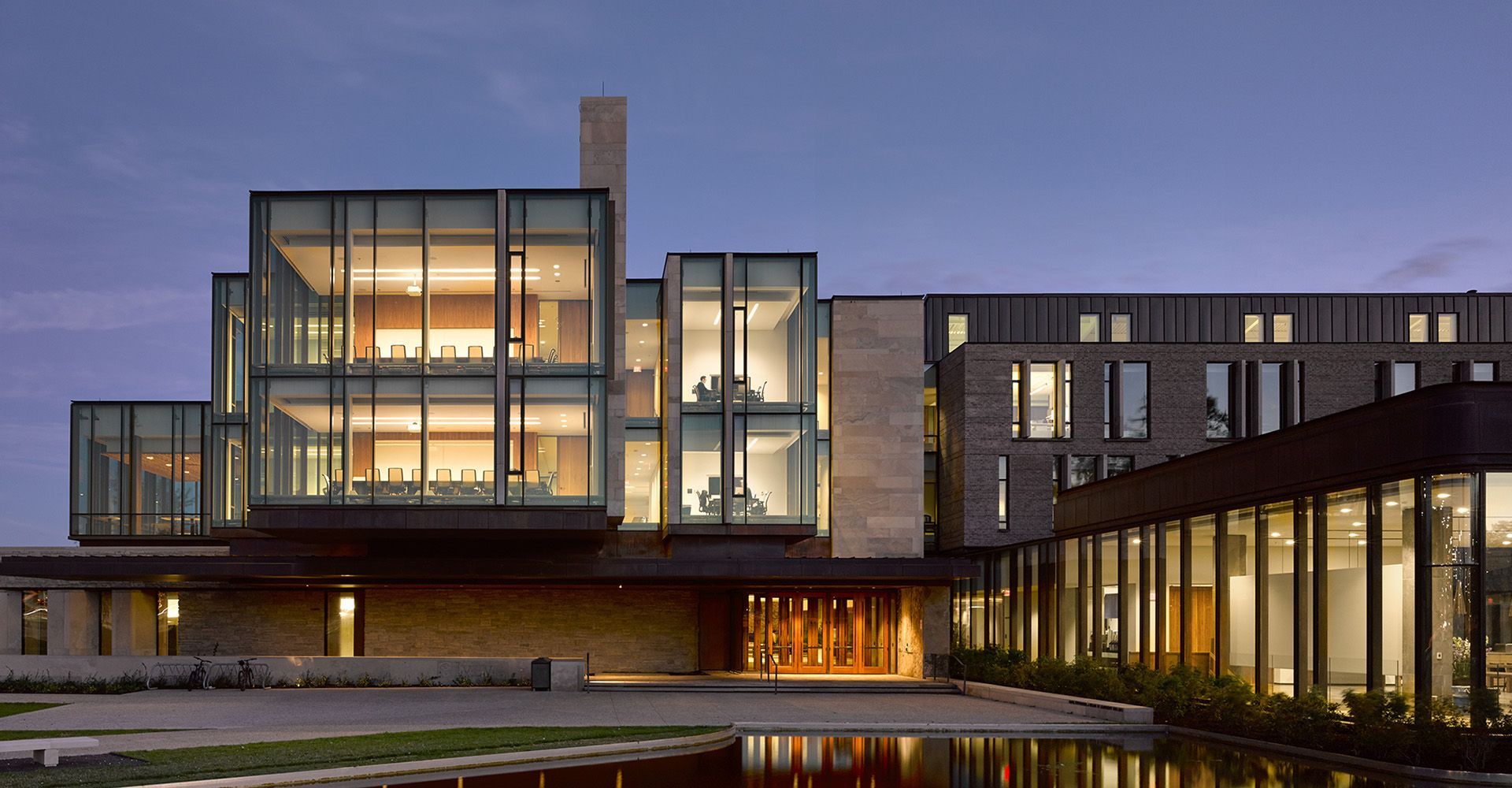
For service teams, modern golf clubs require all the food storage and preparation areas to properly deliver unforgettable dining experiences. Clubhouse buildings need to include all the kitchens, bar areas, change rooms and cold storage areas to facilitate effective operations.
Let’s explore the importance of building design for food and drink service and delivering enjoyable guest experiences.


Meet Matt MacFarlane, Greenhills Country Club
To explain the importance of a well-designed and built clubhouse, Summit Steel Building spoke with industry professional, Matt MacFarlane of Greenhills Country Club, one of Ontario’s most prestigious golf courses. We wanted to learn more about golf facilities on the food and beverage side of operations. Is a larger clubhouse better? Or does it come down to good layout and organization?
Matt has worked in several London, Ontario area golf clubs as a bartender, server and manager, Including Riverbend Golf Club and the London Hunt & Country Club. He is currently the Assistant Food & Beverage Manager at Greenhills Country Club. Recognized as a team player who is highly motivated, organized, and detail-oriented, Matt excels in delivering customer service experiences within the restaurant industry.
Connect with him on LinkedIn.

- What do you like most about your involvement in running food and beverage operations?
My favourite part of running golf course F&B operations is getting to build some familiarity with the membership. It truly goes deeper than your normal, restaurant regular customer. At private golf clubs, members view the course, clubhouse and facility as an extension of their own home. They take a genuine interest in our staff, are excited about new and up and coming events, and look forward to showing off the club as ‘their club.’
So, when we host important events for these members (bridal/wedding rehearsals, anniversary dinners, celebration of life's, etc.), it makes it very easy to motivate staff to do the best job that they can. It is not just some random person coming in for a meal; it is a member of our club, who has trusted us with an important event, and we want to make sure the next time we see them they tell us the event was perfect. It is this moment, of relief and satisfaction, that I look forward to the most working at golf clubs.
- How have member/guest expectations changed over your years in the industry? Are people more educated/aware of food trends? Do they expect fancier or more complicated menus?
Since the pandemic, people seem to know what they are talking about far more than before, in my experience. I don’t mean that in a joking way, but before the pandemic you did not have a lot of “cocktail enthusiasts” and “at-home-chefs.” Now, people can speak from experience crafting and cooking these items themselves, and thus know when an item is made correctly or not.
In my experience, people at golf clubs usually prefer the standard pub fare and the classics. Try as we may to create an inspired special cocktail/food item, you can’t beat a turkey club sandwich and your favourite draught beer.
That said, there is a time and place for the fancier, more complicated dishes. As I mentioned before, people seem to be a lot more original in their desires, thanks to having their eyes opened from all of the at home cooking and drinking. For all the events that I stated earlier, people tend to avoid the traditional sandwich platters and shrimp rings and are now looking more towards fancier passed hors d’oeuvres.
- How valuable are banquets and charity/member events to overall revenues and profits? How do good facilities enable these types of activities?
To put a number to it, I would say somewhere around the 35-45% margin, depending on the facility of course.
Good facilities can encourage these types of events by being as multi-purpose as possible. Large open spaces (no beams or posts), windows, open concept areas/rooms are best in my experience. That way, the room can be whatever is needed. Wedding for 200? Roll in some tables and chairs. Open house for a new clubhouse? Clear everything out. And everything in between. Having open space can really allow a F&B department the ability to put on a wide variety of events.

Read why your course facilities don’t have to be your handicap when it comes to giving golfers a green jacket experience: "Steel buildings on par for golf courses."
- Have you found that investment in facilities (such as bigger storage facilities, halfway huts, more course washrooms, banquet spaces, etc.) have paid off for clubs? How so?
Absolutely. Again, the people who are members at golf clubs are looking for reason to go as frequently as possible and stay as long as possible when they are there. At the London Hunt & Country Club, they had a full fitness area in the basement area for the members. So, some would show up at 6:00AM to workout, come into the restaurant for a bite to eat, head out for a tee-time at 10AM, back in the clubhouse around 2PM for some drinks. Then they would head back downstairs, take a shower in the changerooms, and be back in the restaurant for dinner with their family. Overall, leading to a 12-hour day at the club, but they worked out, ate, played golf, had some social time with friends, and then a meal with their family.
It is my experience that people who join these facilities try to plan the rest of their life around the time they get to spend at the club, so whatever facilities a club can offer them that will save them a trip somewhere else, they will use them.
- What are the key elements in a good clubhouse facility? Is it best to have all functions (pro shop, club sign-in, kitchens, dining, bar, event space, changerooms, equipment storage areas, etc.) under one roof, or have several smaller separate buildings that focus on just one or two areas of specialty?
Given the options, I would say the better choice would be the several smaller separate buildings, focusing on their respective area of expertise, primarily for efficiency. Having different physical areas allows each department to fully utilize their space, thus not having to sacrifice anything to accommodate another department. It is also easier, for example, to direct someone with a golf inquiry to the Pro Shop, with them knowing that no matter where they turn in that building, someone in there will have the answer to their problem as opposed to trying to navigate through a much larger building with different areas, departments and staff running around, it can be confusing and frustrating for someone new to the building.
- What trends do you see changing in the industry over the next few years? How will golf courses need to adjust or expand their facilities to meet future needs?
People just want more. I imagine more courses will soon start having their own simulators to keep their golfers entertained over the off-season, so a facility that could accommodate it would be necessary. I think the trend that is sticking around after the pandemic is people wanting their space. Gone are the days where people are okay being crammed in a dining room like sardines so long as the food is good. Now, people want peace and quiet in their dining atmosphere. Having a large restaurant space to have a sizable number of tables spaced out will be crucial in the success of any restaurant in my opinion.
- What has been the most important lesson you've learned? What is the one thing people should know (either as staff or a member of the club)?
“The answer is yes, what is the question?”
This service mantra has guided me throughout my F&B career but is amplified when regarding private golf courses. The membership cares deeply about the club and wants the best for it. They spend hard earned money to be a member, support the events, both golf and otherwise, and thus, I believe that they are entitled to have whatever we can offer them. If someone asks for a bottle of sparkling water and we have just run out, we will run to the store as soon as possible and get it for them. Without the membership, there would be no club, so it is our job to accommodate them in any way possible.
About the author
A. Paul Mitchell is the Marketing Director for Summit Steel Buildings and is an award-winning marketing professional with over 30-years experience in design, marketing and corporate communications. His previous cross-industry experience has helped develop an extensive breadth of skills, including writing, graphic design, web design, media relations and photography. Paul holds an Executive Master of Business Administration degree (MBA), a Bachelor of Arts degree and professional certificates in Leadership and Business Analysis from Western University. He also completed Centennial College’s post-graduate marketing and business management program. He lives in London, Ontario with his family.