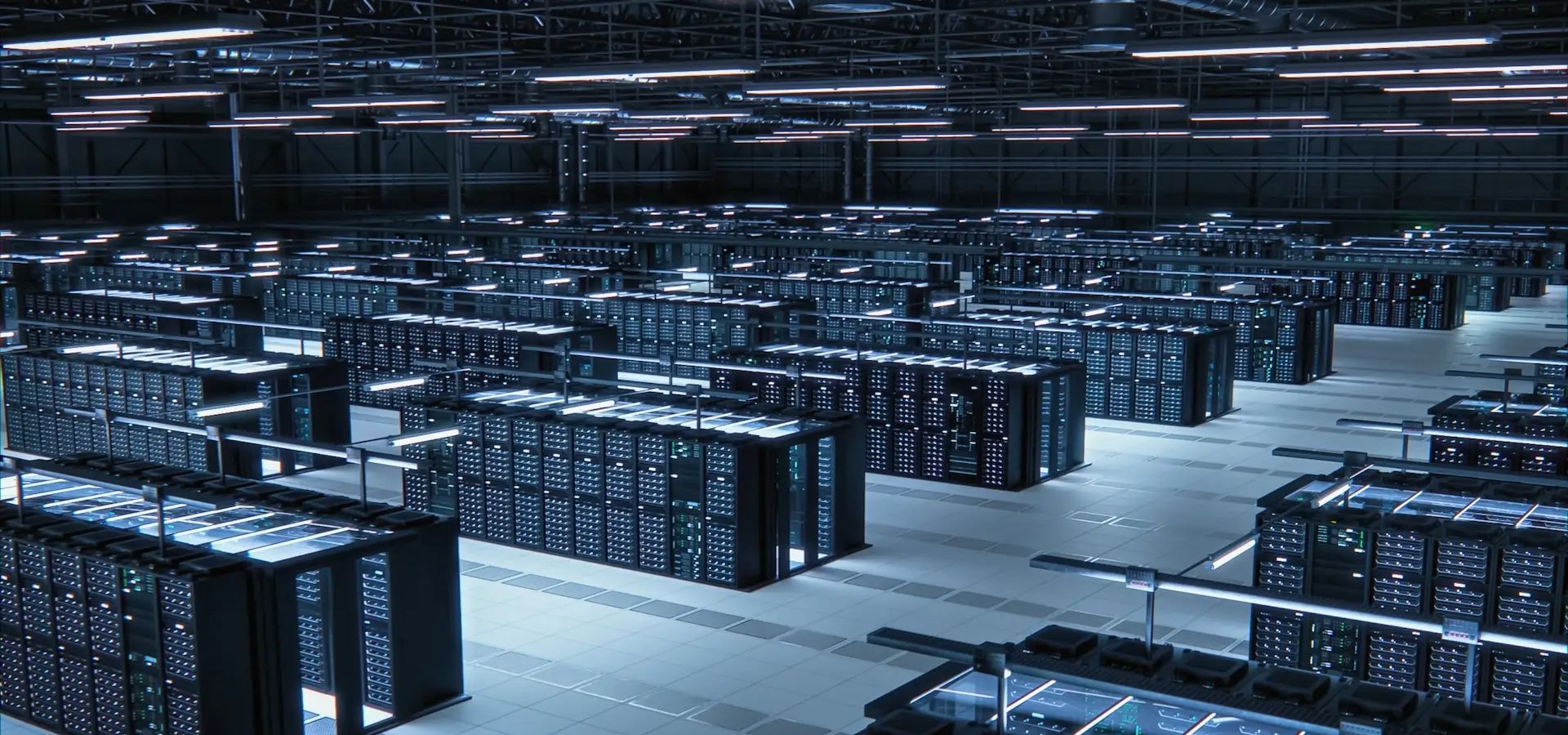
Canada's AI boom is about to reshape how we build data centers
While the world watches American hyperscalers race to build the next generation of AI infrastructure, something quieter – and more strategic – is happening in Canada. The country is positioning itself as one of the most attractive places on the planet to build AI data centers, and the opportunity for our construction industry is enormous.
The question facing Canadian developers, operators and contractors isn't whether this opportunity is real. It's whether they're ready to build at the speed it demands.
Canada didn't stumble into AI leadership
This isn't a sudden boom. Canada has been quietly building the foundation for decades. The Vector Institute in Toronto, Mila in Quebec and the Alberta Machine Intelligence Institute (Amii) helped establish this country as one of the earliest serious hubs for machine learning and neural network research. The talent that sits inside global AI companies today (at OpenAI, Anthropic, Google DeepMind, and Meta) was, in many cases, trained right here.
That talent base is now pulling infrastructure investment north. Microsoft, Amazon Web Services, Google, Equinix, eStruxture and Stack Infrastructure have all expanded Canadian operations in the past few years. Montreal has emerged as one of North America's fastest-growing data center markets. Calgary, Vancouver and Toronto aren't far behind.
And Ottawa is putting real money behind it. The
Canadian Sovereign AI Compute Strategy, announced in
Budget 2024, commits $2 billion over five years to build domestic AI infrastructure, including up to $700 million through the AI Compute Challenge to expand commercial AI data centers on Canadian soil. Budget 2025 added another $926 million for sovereign computing. This is not simply a press release – it's procurement.
Why operators are choosing Canada
Three structural advantages are driving the shift.
1) The climate works in our favor
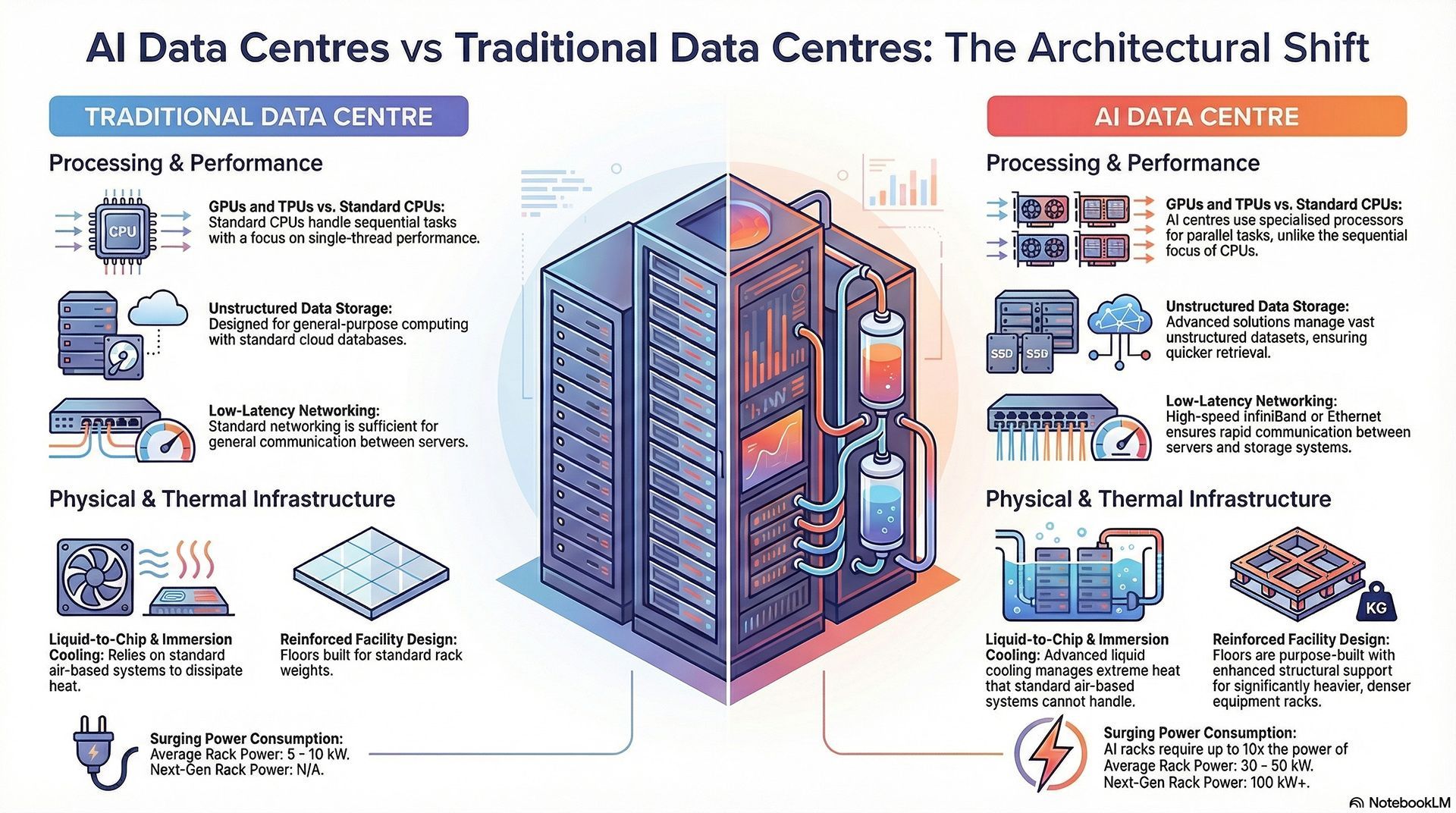
AI workloads generate punishing heat. GPU clusters running training and inference at scale push data center cooling demands to levels traditional facilities were never designed for. Canada's cooler temperatures allow free-air cooling for significant stretches of the year, cutting mechanical cooling costs and improving overall energy efficiency. What's a liability for the rest of our economy is (for once) an asset.
2) Hydroelectric power changes the math
AI facilities consume electricity in quantities that strain regional grids. Quebec and British Columbia offer something most jurisdictions can't match: abundant, low-cost, low-carbon hydroelectric power. For hyperscalers under increasing pressure on sustainability commitments, that combination is hard to ignore. Montreal's emergence as a data center hub is no accident; it sits on top of cheap hydro and dense international fiber connectivity.
3) Stability and sovereignty are now competitive advantages
In a world increasingly defined by tariff uncertainty, supply-chain disruption and geopolitical risk, Canada's regulatory stability and proximity to U.S. markets look better than they did even three years ago.
Domestic manufacturing capacity (including Canadian steel) adds another layer of resilience that matters more every quarter.
The construction challenge is real
Here's where the conversation gets practical. AI data centers are not conventional buildings. They demand:
- Massive clear-span interiors to accommodate GPU server halls, cooling infrastructure, cable trays, electrical distribution and battery backup – all without interior columns getting in the way.
- Structural capacity for heavy rooftop and interior mechanical loads – chillers, transformers, UPS systems and high-density rack loads that conventional construction can't economically support.
- Expansion-ready design that allows operators to scale capacity as AI compute demand doubles on increasingly short cycles.
- Aggressive timelines that don't allow for the season-by-season pace of conventional Canadian construction.
Timelines are especially the one factor most operators underestimate. Canadian winters compress build seasons across most of the country; every month lost to weather is a month of compute revenue gone.
Why pre-engineered steel is the right answer
Pre-engineered metal buildings were designed for exactly this kind of project. Off-site fabrication shortens schedules. Coordinated delivery keeps trades sequenced. On-site erection happens fast enough to keep aggressive AI timelines on track even through Canadian winters.
Just as importantly, engineered steel framing delivers the long clear spans, the structural capacity for heavy mechanical loads and the design flexibility to plan for expansion from day one. This method of construction is how serious industrial facilities have been built in this country for years.
What's changed is demand. AI infrastructure is going to be one of the largest construction categories in Canada over the next decade. The operators who win this race will be the ones who can move faster – and that means choosing construction systems built for speed.
Where Summit Steel Buildings fits in
Summit Steel Buildings manufactures and supplies pre-engineered steel building systems in Canada, for Canadian projects. That matters for AI infrastructure developers focused on schedule certainty, supply-chain resilience and tariff exposure – three concerns that have moved sharply up the priority list this year.
For developers, operators and contractors taking on AI data center projects, Summit Steel Buildings offers:
- Custom-engineered building systems designed around data center loads and layouts
- Clear-span structural designs that maximize usable floor area
- Expansion-ready configurations that scale with compute demand
- Canadian manufacturing and domestic sourcing to reduce tariff and logistics exposure
- Durable, energy-efficient envelopes engineered for Canadian climate conditions
- Compressed construction timelines through off-site fabrication and coordinated delivery.
The decade ahead
Canada's AI infrastructure opportunity is one of the biggest construction stories of the next decade. Billions will be invested. Many facilities will need to be built. And the ideal building construction partner will be the one that understands both the technical and structural demands as well as the urgency to get projects finished on time to meet market demand.
Summit Steel Buildings is ready to be part of that process.
Planning a data center, AI compute facility or large-scale industrial project?
Contact Summit Steel Buildings to scope your project, review site requirements and request a custom quote by using the online form or by calling 1-877-41STEEL. We’ll give you a precise quote and preliminary drawings for your ideal pre-engineered steel structure to help develop your AI data center.
Read the first part in this series about why AI infrastructure demands better buildings.
About the author
Darren Sperling has specialized in the engineering and delivery of pre-engineered steel buildings for over 15 years and has experience in over 20 countries worldwide. He can be contacted at Summit Steel Buildings at (877) 417-8335, by email at darren.sperling@summitsteelbuildings.com or on LinkedIn.